No grades.
Patches.
Five levels, and between each one a half step: the same patch split in two colors. Nine steps, nine patches. A patch is proof of something you did, not a mark someone gave you.
Five levels.
Four half steps.
Every step has one real condition. You climb by finishing real work and meeting the step's condition, never by hours logged in.
 Level · 1/9Chispa
Another kid uses something you made.
The platform checks it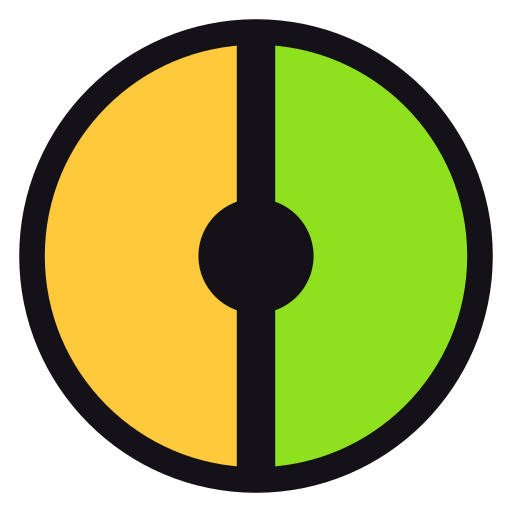 Half step · 2/9Half step to Maker
It holds up: it is used more than once.
The platform checks it Level · 3/9Maker
Someone at home uses it three times.
The platform checks it Half step · 4/9Half step to Builder
Another person understands it without you explaining.
An adult signs off Level · 5/9Builder
Someone uses it without you beside them.
An adult signs offThe road ahead
Steps 6 to 9 are designed in full and loaded, but not yet open to kids. They are shown here so you can see where the path goes.
 Half step · 6/9Half step to DirectorRoad ahead
You start dividing the work with others.
An adult signs off Level · 7/9DirectorRoad ahead
A project from start to finish, and you present it.
An adult signs off Half step · 8/9Half step to MaestroRoad ahead
Help another kid finish theirs.
The platform checks it Level · 9/9MaestroRoad ahead
Teach a Chispa until they finish something.
An adult signs off
An adult's signature always comes with a written note: what they saw. Automatic conditions cannot be signed.
Nine real designs.
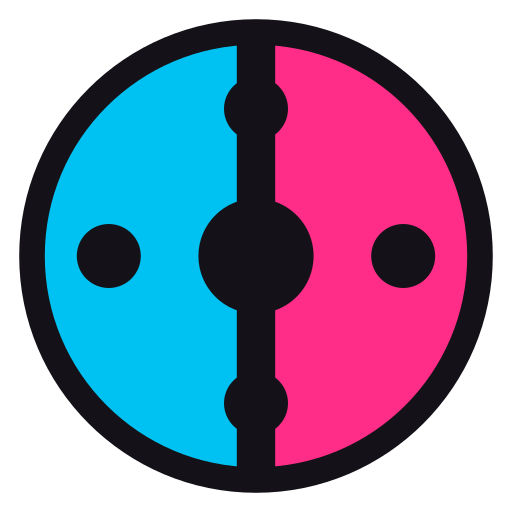
These are the patches as they are made. The half step carries the mark of the level it leaves and the color of the level it enters.
- 1/9 · One dotChispa
- 2/9 · Half stepHalf step to Maker
- 3/9 · Three dotsMaker
- 4/9 · Half stepHalf step to Builder
- 5/9 · Five dotsBuilder
- 6/9 · Half stepHalf step to Director
- 7/9 · A starDirector
- 8/9 · Half stepHalf step to Maestro
- 9/9 · A star in a ringMaestro
Three things,
always in this order.
Finish
Finish real work in the step, not just attend.
Meet the condition
Every step has its own condition, such as “someone uses it without you beside them”.
An adult signs off
Where the step asks for it, an adult signs with a written note on what they saw.
And on Fridays, you stand on the stage.
Every Friday is show day. Kids show their work to the campus: what they set out to do, how it works, and what went wrong the first times and how they fixed it.
Their voice may shake the first time. They keep going anyway.
That is why patches mean something: a kid has already stood behind real work, many times, before the big moments.
The same patch,
wherever you earn it.
In our studio, a patch is sewn on the apron the same night it is earned. Steps that need an adult or a group are earned in the live meeting, and a patch earned online is worth the same.
The same path,
taught for your age.
Missions have versions by age, and the way they are explained changes too. Age comes from the account, so nobody is asked.
Short and visual
Very short sentences, one instruction at a time, the picture first. Text on screen is in capitals, and a quick face check at the end.
A reason for everything
Short sentences with a “why”. Kids say “I think this because…” and rate themselves on a scale.
Reasons and data
More depth, real data and a rubric: on the way, achieved, outstanding.
In our studio, kids of different ages share a table of four. Online we split by age, because a 7-year-old and a 14-year-old need different rooms.
970 missions.
17 subjects.
One example per subject and age space, from the 2026 curriculum. See all 17 subjects.
7–9 · 370 missions
- MathThe House of Hundreds
- ScienceMagnet Maze
- English Language ArtsThe Case of the Missing Mango
- Spanish Language ArtsThe Fable Puppet Show
- Computer ScienceThe Signal Bars
- Artificial IntelligenceRock, Paper, and Prediction
- TechnologyThe Snap! Dance
- DesignA Sign Anyone Can Read
- ArtLines of the Great Wave
- MusicThe Table Band
- Financial LiteracyThree Ways to Get Paid
- Social StudiesThe World on the Floor
- Ethics & CitizenshipOur Table's Constitution
- Physical EducationA Score of Steps
- Life SkillsClean Clothes, Ready Table
- Earth ScienceTwo Volcanoes, Two Shapes
- ChallengesThe Parachute Egg
10–11 · 235 missions
- MathThousandths of a Second
- ScienceBeaks for Every Meal
- English Language ArtsLost in Translation
- Spanish Language ArtsThe Recess Court
- Computer ScienceHow the Picture Gets There
- Artificial IntelligenceI Direct the Image
- TechnologyGame Remix
- DesignThree Quick Versions
- ArtThe Rainy Street
- MusicMy Eight-Measure Piece
- Financial LiteracyFrom Workshop to World
- Social StudiesSame Place, Two Maps
- Ethics & CitizenshipThe Law Factory
- Physical EducationCompose, Then Dance
- Life SkillsA Day on the Plate
- Earth ScienceThick Lava, Thin Lava
- ChallengesThe Craft-Stick Bridge
12–14 · 365 missions
- MathThe Free-Throw Parabola
- ScienceThe Foil Boat
- English Language ArtsThe Correction Desk
- Spanish Language ArtsLetters That Open Doors
- Computer ScienceThe Network Detective
- Artificial IntelligenceSkewed Data
- TechnologyThe Network Castle
- DesignThe User's Path
- ArtFantasmagorie
- MusicOur Band
- Financial LiteracyUp 20, Down 20
- Social StudiesThe Cartoon That Speaks
- Ethics & CitizenshipThe Poster That Persuades
- Physical EducationTrail Journal
- Life SkillsHelmet and Course
- Earth ScienceBottle Seismograph
- ChallengesThe Sun Oven
Flagship missions, such as Rocket engines, The sea and Inside a chip, are on the curriculum page.
Every level closes
with something big.
Chispa
A first work shown to the family.
Maker
A product that someone at home uses.
Builder
A solution to a real problem in their community.
Director
A team project, with roles and a public presentation.
Maestro
Mentor a Chispa and launch something of their own.
Real things,
in the first year.
Every mission ends in something finished that someone else can use. These are examples of finished work, not results from real students.
A story with a voice
A song with their own lyrics
A one-button game
A ten-second video
A card published at a link
An app the family uses
The nine steps still decide how a kid moves up. The subjects give every mission a place on the map your school knows: subject, unit and age space. See the curriculum.
For your child: A kid sees a clear path, and you can see exactly where they are on it.
Let's talk
about your kid.
Request an interview. We will write to set it up, and your family goes first on the list for the first cohort.
Request an interview